
In the digital economy, data is one of a company’s most valuable assets. However, it can be easily damaged or leaked. A data breach is no longer a rare event—it is a systemic risk that directly impacts a business’s financial health, reputation, and legal standing.
The Real Cost of a Data Breach
Global research shows that the costs of data breaches are increasing every year. For example, according to the 2025 IBM report:
- The average global loss per incident is approximately $4.88 million.
- In the financial sector, this figure is even higher—approximately $6 million.
- More than 70% of organizations experience operational disruption after a data breach.
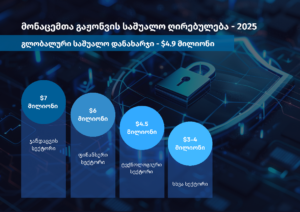
The damage caused by such an event may be associated with loss of revenue, loss of customer trust, financial sanctions, legal fees, compensation payments, and damage to brand image, in addition to the need for technical remediation (which is an additional cost). It is worth noting that it takes an organization an average of several months to detect a data breach, which contributes to increased losses and negative outcomes.
Why do data breaches occur?
Data breaches can occur for several reasons:
- Cyberattacks (malicious attacks) – the most frequent cause.
- Human error – incorrect system configuration, phishing attacks.
- Technical issues – software bugs, API malfunctions.
- Processing data in different, disparate systems (cloud + on-premise) – control and monitoring are more difficult.
In modern trends, risks related to the use of AI are emerging. For example, when using AI, confidential information provided to it might be accidentally exposed to others. AI services often operate on cloud infrastructure, meaning data could end up on third-party servers, increasing the probability of loss of control and leakage. AI can combine fragments from various sources to create new, more sensitive information; for example, combining individual logs or user messages can reveal a personal profile. Usually, a breach is a one-time incident, but when using AI, a breach can repeat automatically—one error duplicated in thousands of responses. Artificial intelligence not only increases the risk of data leakage but also gives it a new dimension in terms of context, scalability, and automation. Therefore, strict control is required: data minimization, access restriction, and regular audits.
Why is ISMS implementation an effective prevention mechanism?
ISMS (Information Security Management System) is a system that helps a company properly manage and protect its information. It is a systematic approach that ensures information security across the company. Its main goals are:
- Identifying and managing risks.
- Inventory and protection of information assets.
- Standardization and implementation of policies and processes.
- Ensuring continuous monitoring and improvement.
Implementing ISMS significantly reduces the damage caused during an incident because it:
- Enables timely detection.
- Ensures rapid response (Incident Response).
- Reduces financial losses.
- Promotes customer trust.
IBM Cost of a Data Breach Report studies show that companies using AI and automation in their security measures save an average of $1.9 million in data breach costs.
The situation in Georgia:
The cybersecurity field is actively developing in Georgia, yet significant challenges remain.
Practical challenges: In practice, many companies still do not protect data effectively-many have not fully implemented ISMS; security rules are often just ‘on paper’ and not actually followed. Employee errors (e.g., falling for phishing, using weak passwords, etc.) are frequent and cause serious problems. For small and medium-sized businesses, cybersecurity is still a low priority.
Growing risks: More services are moving online—such as banking, online stores, government services, etc. Companies also simultaneously use both online (cloud) and their own systems, which complicates the data management process. Additionally, cyberattacks are becoming more frequent, further increasing risks.
Why should a company implement ISMS?
ISMS is one of the most effective tools for reducing risks and losses while increasing organizational resilience. In Georgia, where digital transformation is proceeding rapidly, ISMS implementation has become a strategic necessity. The regulatory requirements for information security are growing, customers value data protection more, international partners require compliance with security standards, and at the same time, cyber risks are increasing daily. A well-functioning ISMS ensures not only information security but also a competitive advantage. The IT Tech team will ensure the correct implementation of ISMS for your company—contact us: info@ittech.ge | +995 32 204 10 20 itt.ge